
The International Canoe Federation has unveiled its new Olympic qualification system designed to deliver clearer storylines, higher stakes and increased excitement in the build-up to Los Angeles 2028.
At the heart of the new system is an Olympic Ranking that will turn the biggest Canoe Sprint and Canoe Slalom events into decisive steps on the road to the Games, allowing fans to follow nations and athletes as they battle for quota places.
Developed through extensive consultation with National Federations and key stakeholders following the formation of the ICF’s Olympic Qualification Working Group in 2023, the multi-phase qualification process will see countries secure quota spots through the Olympic Ranking, continental qualifiers, and a global qualifier in Canoe Slalom.
With qualification points on offer at major competitions, the stakes will be raised in 2026 and 2027, driving greater participation, deeper fields and heightened interest throughout the Olympic cycle.
A total of 236 quota places have been allocated for Canoe Sprint, while 82 spots will be awarded in Canoe Slalom. Among those places, the host country will be allocated four in Canoe Sprint and two in Canoe Slalom. Two provisional universality spots have also been allocated in the paddle sport disciplines. Gender equality is once again guaranteed for the Games.

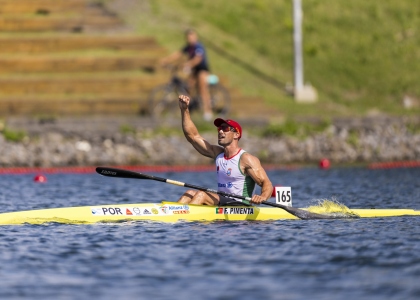
CANOE SPRINT
Qualification in Canoe Sprint will unfold across two phases over the next two years. The Olympic Ranking phase will serve as the main route to LA28, awarding 162 quota places – 81for men and 81 for women. A further 72 quota places, split evenly between men and women, will be decided directly through continental qualifiers.
The Olympic Ranking consists of 10 separate rankings, one for each event on the LA28 programme, with points awarded to National Olympic Committees (NOCs).
This nation-based approach is designed to intensify rivalries, and ensure strong competition across the full ranking period.
The ranking window will run from 20 April 2026 until the end of 2027, featuring the 2026 and 2027 ICF Canoe Sprint World Championships as well as six ICF Canoe Sprint World Cups and two Continental Championships per continent across the two seasons.
Each NOC may count a maximum of eight results per ranking, with those results required to come from eight different competitions. To promote global competition and diversity, no more than six results may come from competitions held on the same continent.
In crew boat events, ranking points can only be earned in the corresponding Olympic disciplines — K4 500m, K2 500m and C2 500m. In single boat categories, all Olympic Ranking competition events contribute to the points tally, with only the best single-boat result per NOC counting at each competition.
Quota places awarded through the Olympic Ranking are allocated as follows:
- K4: 11 NOCs from at least four continents earning four quota places each
- K2: Four NOCs earning two quota places each (with K4-qualified NOCs ineligible)
- K1: Six NOCs earning one quota place each (with a maximum of five K4-qualified NOCs eligible to earn a K1 quota)
- C2: Eight NOCs earning two quota places each
- C1: Five NOCs earning one quota place each
NOCs that secure quota places through the Olympic Ranking will not be eligible to compete in continental qualifiers in the same category, further elevating the importance of ranking events and intensifying competition.
CLICK HERE FOR OLYMPIC QUALIFICATION SYSTEM IN CANOE SPRINT

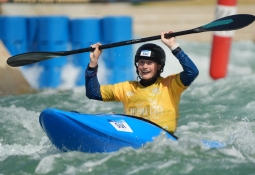
CANOE SLALOM
There will be a three-phase qualification process in Canoe Slalom with the Olympic Ranking once again playing a central role. A total of 38 quota spots – 19 for men and 19 for women – will be on offer through the ranking system, with dedicated lists for each of the six Olympic events.
The ranking period will run from 20 July 2026 to 3 October 2027, with points awarded to individual athletes at each Olympic Ranking competition including the 2026 and 2027 ICF Canoe Slalom World Championships as well as seven ICF Canoe Slalom World Cups across the two seasons.
Over the nine competitions, a maximum of five best results (highest points) of each athlete are counted to define the final Olympic Ranking.
Quota places awarded through the Olympic Ranking are allocated per gender in a limit of one per NOC per event as follows:
- Kayak single: Six quota places
- Kayak cross: Three quota places
- Canoe single: 10 quota places
An athlete can only obtain one quota place for their NOC. Once this is achieved, they are no longer eligible to be considered for any further athlete quota places, even if returned.
A further 30 spots, split evenly between men and women, will be up for grabs in the continental qualifiers.
A final 12 places will also be contested in a global qualification competition, where the top two highest placed eligible, not yet qualified athletes will be allocated a quota place for their NOC across the kayak cross, kayak single and canoe single events.
CLICK HERE FOR OLYMPIC QUALIFICATION SYSTEM IN CANOE SLALOM
The new Olympic qualification system for Canoe Sprint and Canoe Slalom aligns with the ICF’s Fit for Future Evolution strategy and supports the objectives of the IOC’s Olympic Agenda 2020+5, reinforcing a strong focus on universality, sustainability and fan engagement.
ICF Vice President Lluis Rabaneda thanked National Federations and key stakeholders for their contributions in the two-year process to formulate the new system.
“For the first time, the ICF has undertaken an extensive and inclusive consultation process to shape the Olympic qualification system,” said Rabaneda.
“By listening closely to our National Federations and key stakeholders, we have been able to build a framework that reflects the needs of the sport and its global community.
“This collective effort has resulted in a system that will increase the visibility of our events, raise the competitive level and create more meaningful races for athletes, fans and media alike.
“This qualification structure is designed to better integrate ICF events into the Olympic journey, thereby giving our athletes – the central figures of the sport – a more prominent platform.
“The contribution of National Federations has been essential in shaping this system.
“It has been a major team effort, and we are excited to see how it strengthens our events and the Olympic journey as we move towards LA28.”
Toshi Furuya, Chair of the ICF Canoe Sprint Committee, said: “The new Olympic qualification system lays the path to LA28.
“With the Olympic Ranking in place, our events will be even more competitive and compelling, starting with the Asian Championships from April 24 to 26 in Hefei, China, closely followed by our opening World Cup of the season in Szeged, Hungary.
“I am also excited by the prospect of our Continental Championships, where nations will seek to earn Olympic Ranking points.
“I am proud of all the work put in to create this qualification system and would like to thank everyone who participated in the consultation process.”
Richard Fox, Chair of the ICF Canoe Slalom Committee, said: “Thanks to the dedication of the Olympic Qualification Working Group, and the strong engagement of our ICF staff and community, we have delivered a qualification system designed to elevate our events and amplify excitement.
“With Olympic Ranking points available across nine competitions, the stakes will be higher than ever for athletes on the road to LA28.
“A Continental phase widens the opportunities for nations, and the final global qualifier will serve as the last chance saloon, where athletes will battle to secure the remaining Olympic quotas for their NOCs.”
For the full Olympic qualification system for Canoe Sprint, click here
For the full Olympic qualification system for Canoe Slalom, click here
Related links