
ICF Canoe Freestyle Committee activities Q4 2025

The past year has been one of significant activity, challenge, and progress for ICF Canoe Freestyle. Building on the momentum of recent World Cups and Championships, the committee has focused on delivering high-quality international competition, strengthening development pathways, and laying foundations for sustainable global growth. Despite external challenges, particularly around water levels and funding delays, the Canoe Freestyle community has demonstrated resilience, adaptability, and a shared commitment to the sport.
Major Events and Competitions
Preparations for the 2025 ICF Canoe Freestyle World Championships in Plattling, Germany, dominated much of the year. Following the success of previous World Cups, planning continued at pace, with Jonas Unterberg stepping in as Chair of the Host Organising Committee following Thomas’s unexpected departure. Jonas worked closely with the Freestyle Committee and German Canoe Federation to ensure continuity and progress, despite delays to some government funding linked to political changes in Germany. Plattling once again proved itself as a home of Freestyle. While exceptionally low water levels created uncertainty and ultimately led to the cancellation of the final two competition days, medals were successfully awarded in all classes based on completed rounds. The Championships were widely regarded as a triumph over adversity. Highlights included gold medal performances by Ottilie Robinson-Shaw of Great Britain and Tom Dolle of France in the premier events, the introduction of an official ICF masters competition, and a cadet side event for under-15 athletes—both seen as important steps in broadening participation. Beyond the World Championships, the international calendar remained strong. The Columbus Cup in Georgia, United States, continued to grow as an annual ICF Level 4 event, attracting top international athletes and offering prize money on what will be the 2029 World Championships feature. In South America, the San Juan Open in Argentina, held on the 2017 Worlds feature, was another successful ICF Level 4 competition and reinforced the region’s growing presence on the Freestyle map. Europe also saw the welcome return of the ECA Euro Cup, with events held in Millau and Nottingham.
Development, Education, and Community Growth
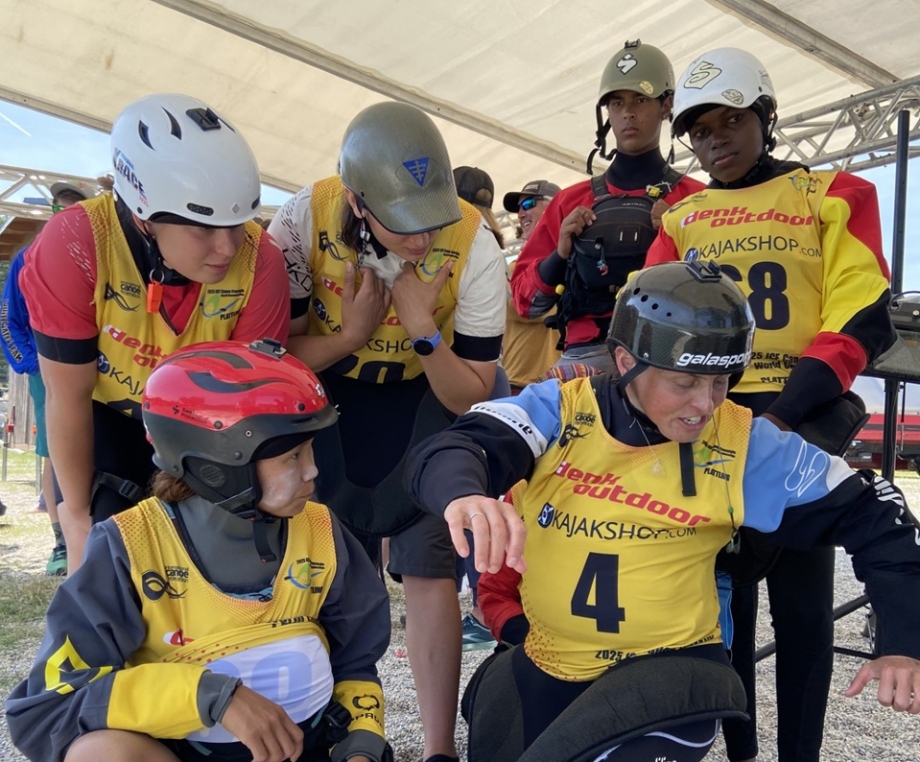
Development activity remained a central pillar throughout the year. Multiple development camps were delivered alongside major events, including in San Juan and Plattling, bringing together paddlers of all ages, abilities, and backgrounds. These camps were supported by strong collaboration between local organisers, committee members, and the wider paddling community, with equipment and expertise shared to ensure inclusive participation. Notably, athletes from countries such as India and Kenya competed in ICF Freestyle events for the first time. Judging and officiating capacity was also strengthened. Judges’ seminars were run in conjunction with events, and groundwork was laid for a structured, ongoing programme of training and accreditation for International Technical Officials. In parallel, the Rules Working Group proposed and progressed appendix and rule changes, while technical delivery guides were reviewed to make the event bidding process clearer and more accessible.
Governance and Committee Developments
Governance activity was particularly visible around the ICF Congress in Antalya, where a new Canoe Freestyle Committee was appointed for the next four-year cycle. The committee thanked outgoing members Matt and Ciaran for their dedicated service, while welcoming new members Mason Hargrove of the United States and Tania Neilson of Great Britain, and the return of Jez, whose experience continues to be highly valued. The committee also undertook community consultation following athlete meetings in Columbus, polling the freestyle community on the future of squirt and OC1 classes. While squirt received clear support to remain an ICF competition class, the OC1 poll was deemed unreliable and will be revisited.
Strategic Growth and Centres of Excellence
One of the most significant strategic developments of the year was the launch of the ICF’s first Canoe Freestyle Center of Excellence in Columbus, Georgia. This initiative, developed in partnership with the local community and ICF, aims to provide a long-term development hub offering coaching, competition, and participation opportunities across the Americas. The designation of Columbus as host of the 2028 World Cup and 2029 World Championships further underlined its importance, and the project is intended to serve as a blueprint for similar hubs on other continents.

Quarter 4 Focus: Consolidation and Forward Planning
Quarter 4 marked a decisive shift from delivery to consolidation and future planning. Following the conclusion of the World Championships, attention turned firmly to 2026 and beyond. Extensive discussions took place regarding the 2026 World Cup series. After a detailed technical visit and consultation, it was concluded that Sort, Catalonia, could not host a World Cup in 2026 due to practical constraints, despite strong local enthusiasm. Clear communication and a unified message were prioritised to maintain trust within the community. As a result, plans were confirmed for two World Cups in June 2026: one in Krakow, Poland – a new pumped whitewater venue for ICF Canoe Freestyle – and the final in Millau, France, a long-standing favourite on the paddlers’ calendar. Committee site visits and organiser engagement are already underway to ensure successful delivery. Quarter 4 also saw continued progress on technical and governance initiatives, including restructuring the Rules Working Group, advancing the development plan, reviewing risk management processes, and expanding judge training pathways. Positive news included Charlie Brackpool’s appointment to the ICF Athletes’ Committee, strengthening athlete representation and cross-discipline collaboration.
Looking Ahead
As the year closes, Canoe Freestyle is in a strong and confident position. With a committed committee, expanding development structures, new venues joining the competition circuit, and the Columbus Center of Excellence coming fully online in 2026, the foundations are firmly in place for continued growth. The challenges of the past year have reinforced the sport’s resilience and unity, and the future of Canoe Freestyle paddling looks both exciting and sustainable.
By Terry Best, Chair of the ICF Canoe Freestyle Committee
Latest posts
Labels
Blog archive
July
April
December
October
July
April
December
September
June
RSS